


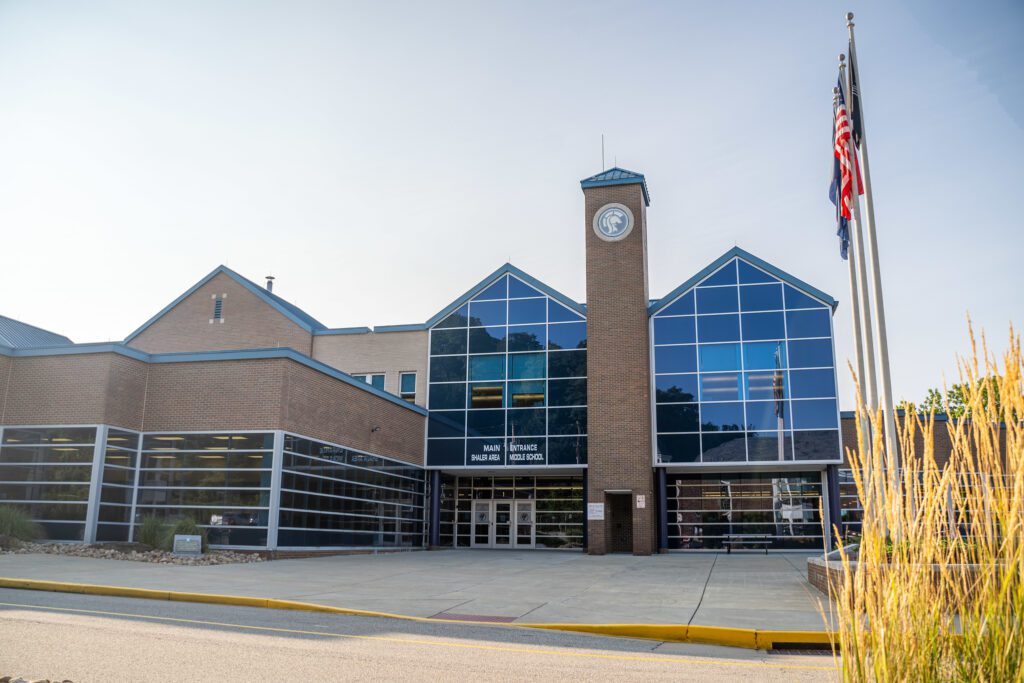
On June 17th, the Shaler Area School District Board of Directors passed a budget for the 2026-27 school year representing a 3.28% decrease in overall expenditures compared to last year. The balanced budget is driven by a successful debt restructuring completed in May 2026, which effectively wiped out a projected $3.7 million deficit without requiring program cuts or tax increases.
While the district’s day-to-day operating costs rose by 2.4% ($2 million) due to normal inflationary pressures and contractual obligations, that increase was entirely offset by a 61.2% ($5.5 million) reduction in non-operating costs, like debt service and facilities.
Drivers Behind Operating Cost Increases
Like many districts across the state, Shaler Area is navigating steep, non-discretionary cost increases that are mandated or driven by the market. Key factors impacting the 2026-27 operating budget include:
- Rising Mandated Benefits: District contributions to PSERS (the state-mandated Public School Employees’ Retirement System) continue to place a heavy burden on local resources, now accounting for 15% of the district’s total overall budget.
- Healthcare Inflation: The district faced a sharp 8.3% increase in health insurance premiums to maintain coverage for its personnel.
- Outside Tuition Pressures: Costs for outside student tuition—including special education placements and cyber/charter school tuition—saw a 6% increase over last year.
Key Investments for the 2026-27 School Year The vast majority of the 2026-27 budget covers typical, recurring day-to-day expenses to keep our schools running smoothly. However, the district was able to include a few key updates and additions for the upcoming year, including:
- Academics & Technology: A new English Language Arts (ELA) curriculum adoption and routine technology updates.
- Athletics: The addition of Girls’ Flag Football and updated shot clocks to meet new PIAA regulations.
- Operations: The replacement of a maintenance vehicle and a dump truck that went out of service last year.
Kimberly Pawlishak, Director of Finance & Operations for the district, shared, “We’re proud to deliver a budget that maintains our commitment to Shaler Area students while protecting our community from extra financial burden. We got here through a successful debt restructure and real operational efficiencies. This doesn’t solve all of our future funding challenges, but it puts us in a forward-thinking position—allowing us to be proactive instead of reactive.” By balancing careful financial planning with necessary investments in our students and facilities, the 2026-27 budget keeps Shaler Area on a stable path forward.